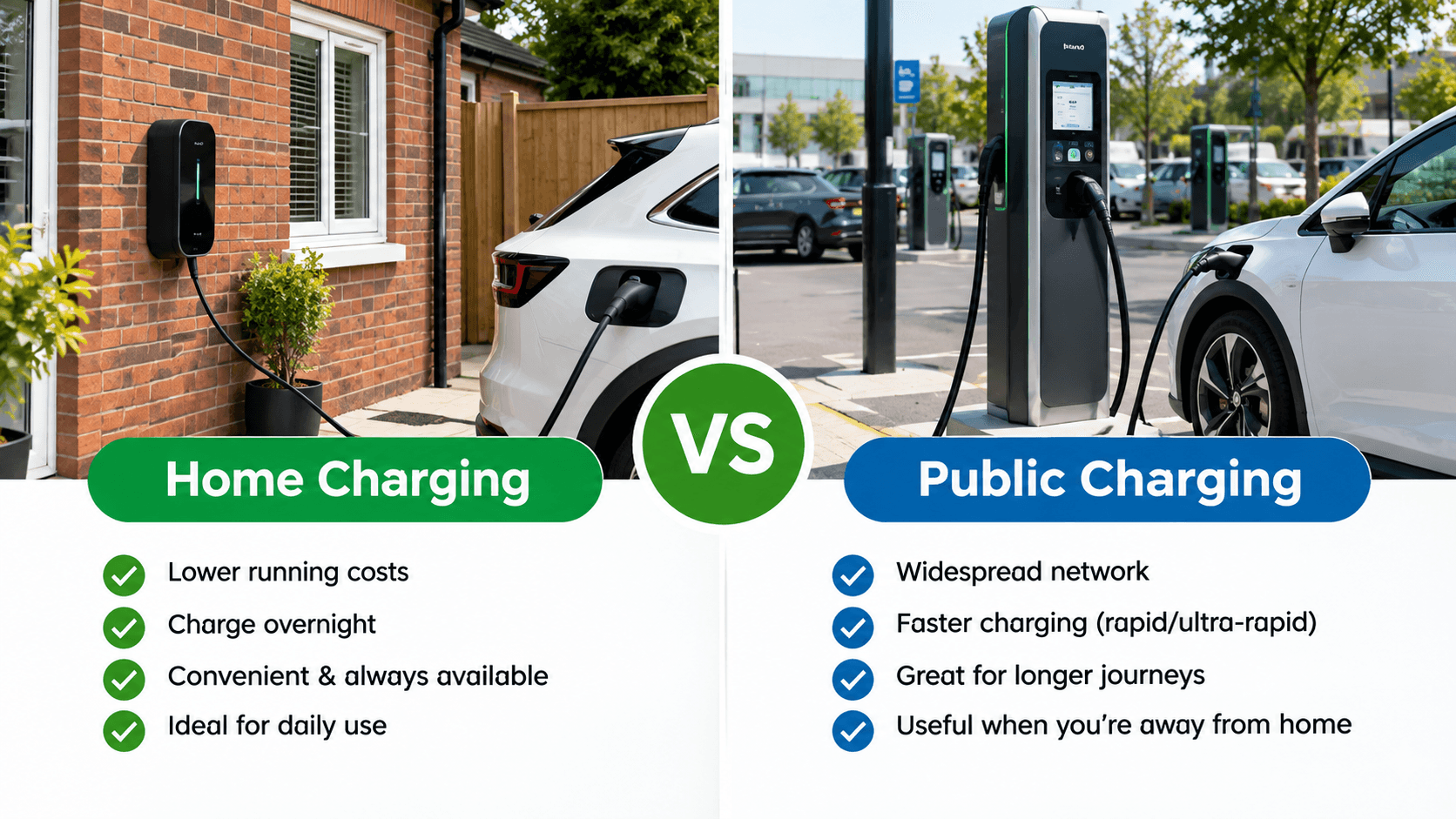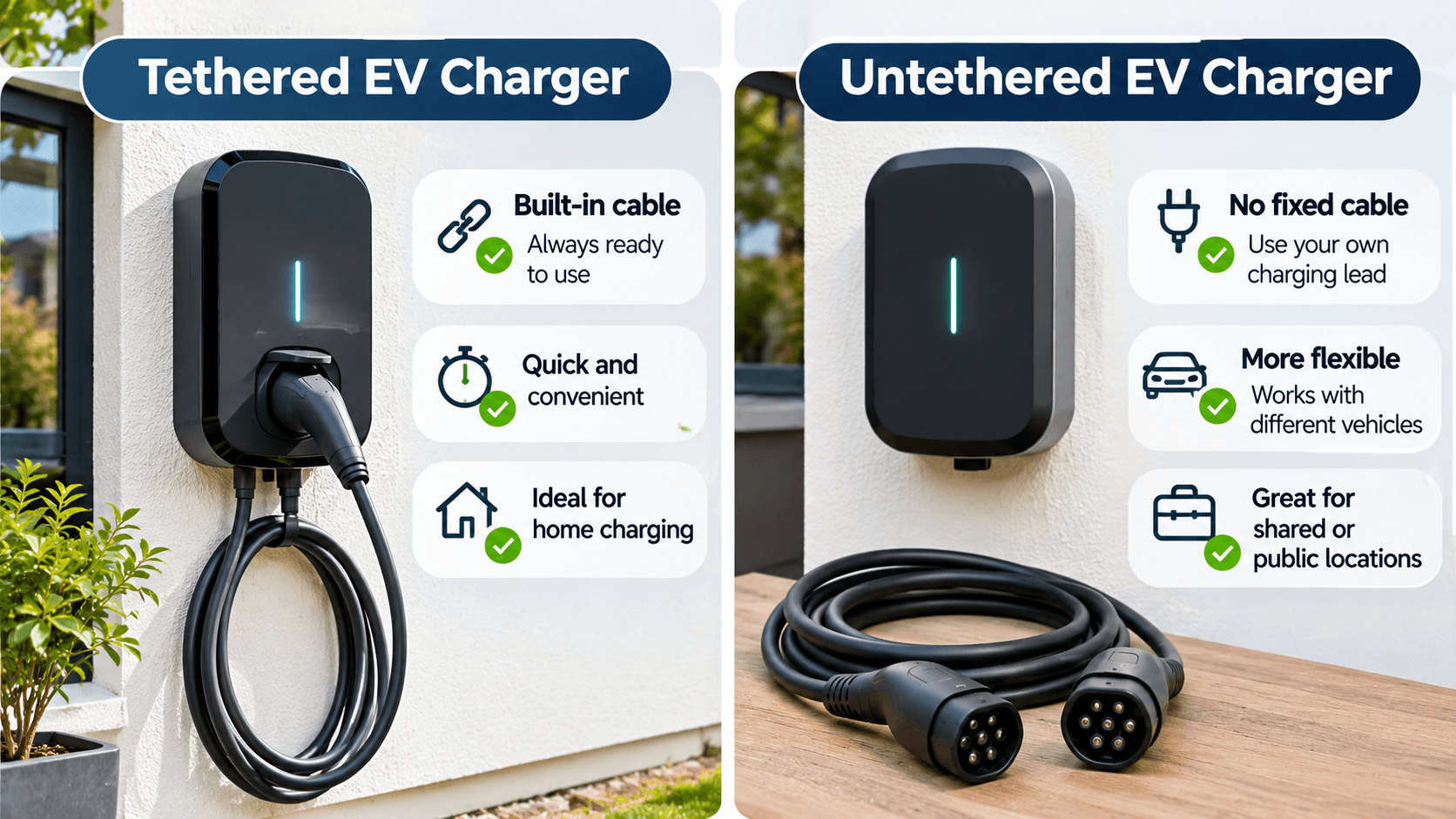
Usage and cost
Best EV Electricity Tariffs for Home Charging in the UK (2026 Guide)
Charging an electric car at home can be considerably cheaper than using public charging stations, especially when you choose an electricity tariff designed for EV owners. Many UK energy suppliers offer special EV tariffs with reduced overnight electricity rates, allowing drivers to charge their veh
By PickASparky Team
16 min read
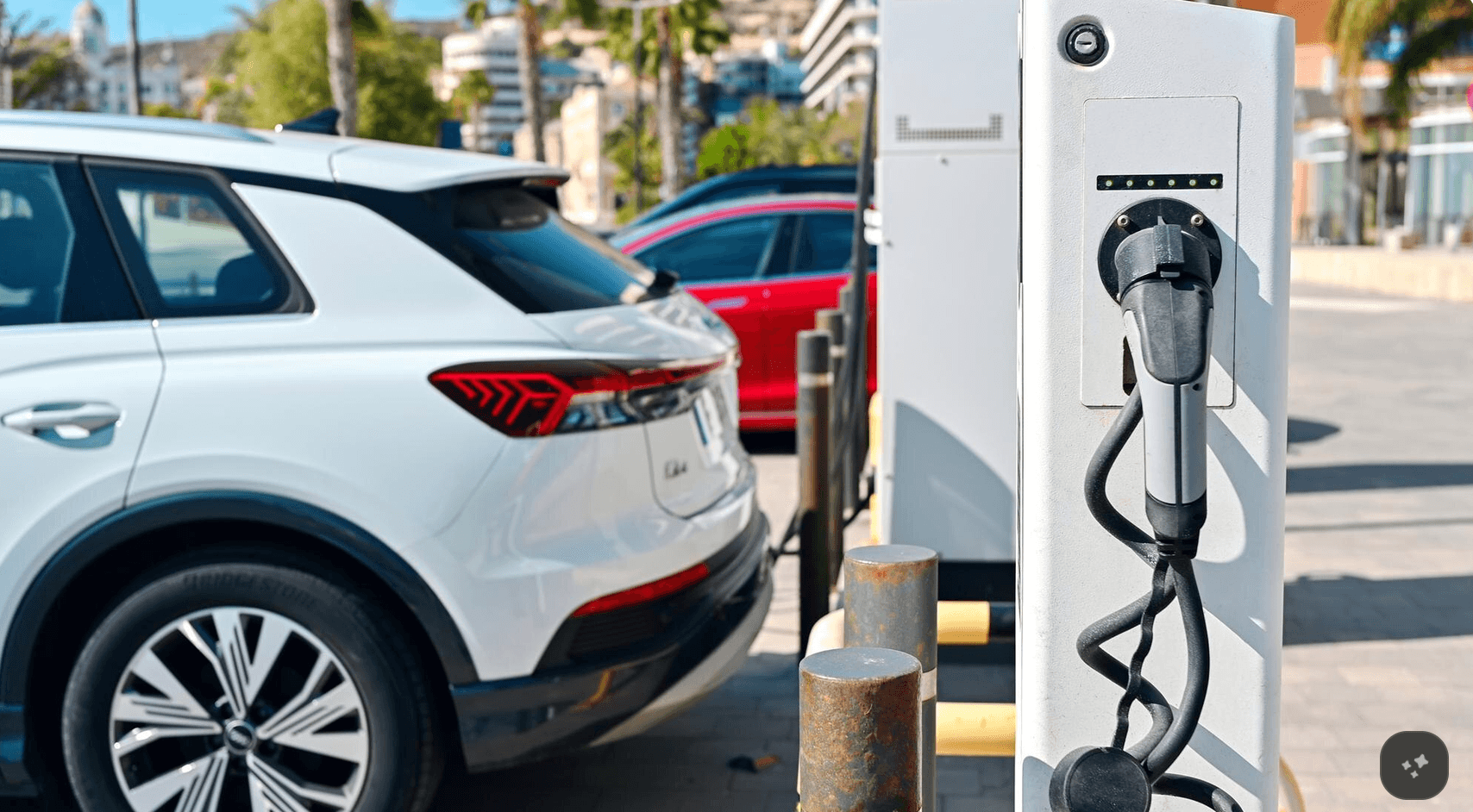
Charging an electric car at home can be considerably cheaper than using public charging stations, especially when you choose an electricity tariff designed for EV owners.
Many UK energy suppliers offer special EV tariffs with reduced overnight electricity rates, allowing drivers to charge their vehicles for a fraction of the cost of standard daytime electricity.
However, the cheapest advertised overnight rate does not always mean the lowest overall household electricity bill.
In this guide, we compare popular EV electricity tariffs available in the UK, explain how off-peak charging works, calculate potential savings and help you decide which type of tariff is best for your household.
What Is an EV Electricity Tariff?
An EV electricity tariff is a domestic electricity plan designed to make charging an electric vehicle at home more affordable.
Unlike a standard electricity tariff, which often charges the same unit rate throughout the day, many EV tariffs offer cheaper electricity during specific off-peak hours.
These periods are usually overnight, when demand for electricity is generally lower.
For example, a household might pay 30p per kWh during the day but only 8p per kWh overnight.
If an electric car requires 50kWh of electricity from the grid, the difference is substantial:
| Electricity Rate | Cost of 50kWh |
|---|---|
| Standard rate at 30p/kWh | £15.00 |
| Off-peak rate at 8p/kWh | £4.00 |
| Potential saving | £11.00 |
These are illustrative rates rather than quotations from a particular supplier. The calculation is based on electricity purchased from the grid, including charging losses.
For drivers who regularly charge at home, these savings can add up over a year.
If you're still considering the initial investment, our guide to EV charger installation costs in the UK explains the typical equipment and installation expenses.
Best EV Electricity Tariffs in the UK for 2026
Several major UK electricity suppliers offer dedicated tariffs or charging plans for electric vehicle owners.
The following comparison highlights popular options available in November 2026.
UK EV Tariff Comparison
| Supplier | EV Tariff | Indicative Off-Peak Rate | Charging Window |
|---|---|---|---|
| EDF Energy | GoElectric 18m v3 with smart charging bolt-on | 6.66p/kWh | 11pm–6am |
| E.ON Next | Next Drive Smart v7.9 | 6.5p/kWh | Midnight–6am |
| Octopus Energy | Octopus Go | 9.4p/kWh | 12:30am–5:30am |
| Octopus Energy | Intelligent Octopus Go | 9.9p/kWh | 11:30pm–5:30am |
| ScottishPower | EV Saver | 8.5p/kWh | 2am–5am |
| British Gas | EV Power May28 v2 | 9.5p/kWh | Midnight–5am |
Indicative tariff examples from a MoneySavingExpert comparison updated in November 2026. Rates, tariff versions, eligibility and availability can change. Prices may vary by region and payment method. Some tariffs require compatible vehicles, chargers or smart charging features.
These figures provide a useful starting point, but they should not be used as the only basis for choosing a supplier.
A tariff with very cheap overnight electricity may have higher daytime prices, standing charges or other conditions.
For the latest independent comparison, see MoneySavingExpert's guide to EV electricity tariffs (opens in a new tab).
How Do Overnight EV Charging Tariffs Work?
Most overnight EV tariffs operate using two electricity rates.
During peak hours, your household pays the normal or higher electricity rate specified by the tariff.
During the off-peak period, electricity is charged at a reduced rate.
For example, imagine a tariff with the following prices:
- Daytime electricity: 32p per kWh.
- Overnight electricity: 8p per kWh.
- Off-peak period: Midnight to 6am.
If you charge your electric car between midnight and 6am, electricity consumed during that period could cost just 8p per kWh.
However, charging outside the discounted window would generally be billed at the daytime rate.
This makes charging schedules particularly important.
Does the Cheaper Rate Apply to Your Entire Home?
On many traditional time-of-use EV tariffs, the reduced overnight rate applies to all electricity consumed during the off-peak period.
This means household appliances may also benefit from cheaper electricity at night.
However, some EV charging products work differently.
For example, an EV-specific add-on may apply discounted pricing only to electricity used for eligible vehicle charging.
Before switching, check whether the discounted rate applies to:
- All household electricity during specified hours.
- Only electricity used by your electric vehicle.
- Charging sessions automatically scheduled by the supplier.
- Specific vehicles or compatible smart chargers.
Understanding this distinction is essential when comparing tariffs.
Octopus Energy EV Tariffs
Octopus Energy offers several electricity tariffs designed for electric vehicle owners.
Two well-known options are Octopus Go and Intelligent Octopus Go.
Octopus Go
Octopus Go offers a fixed overnight charging window with reduced electricity rates.
It can be suitable for drivers who want to schedule their charging manually without relying on vehicle-specific intelligent charging integration.
The main advantage is predictability.
You know when the cheaper charging period begins and ends, allowing you to set a charging schedule.
However, the discounted period may not be long enough to complete every charging session, particularly when using a slower charger or replenishing a large battery.
Intelligent Octopus Go
Intelligent Octopus Go uses smart charging technology to help schedule eligible EV charging.
The tariff includes a designated overnight off-peak window and can arrange additional charging sessions according to its smart charging rules.
Eligibility depends on compatible equipment and other tariff requirements.
The key benefit is convenience, as the system can manage charging around your chosen ready-by time.
However, you should confirm that your vehicle or charger is supported before switching.
For the current requirements, check the Octopus Energy smart tariff terms (opens in a new tab).
E.ON Next EV Charging Tariffs
E.ON Next offers EV-focused electricity tariffs, including Next Drive products.
These tariffs generally provide cheaper overnight electricity alongside a separate daytime rate.
Some options include smart charging functionality, which can help manage when your vehicle charges.
When comparing E.ON Next tariffs, pay attention to the length of the discounted window and whether the tariff requires smart charging to obtain the advertised benefits.
A longer off-peak period may be useful for households with larger EV batteries or drivers who regularly need substantial overnight charging.
However, the total annual household electricity cost remains more important than the night rate alone.
OVO Charge Anytime
OVO Charge Anytime takes a different approach from conventional overnight electricity tariffs.
Rather than simply offering cheaper electricity to the entire household during fixed hours, eligible customers can receive discounted EV charging through a compatible vehicle or charger.
The system manages charging according to the customer's preferences and the programme's scheduling requirements.
Under the pay-as-you-go arrangement, eligible smart charging receives a billing credit reflecting the difference between the customer's normal electricity rate and the applicable Charge Anytime rate.
This can be useful for drivers who prefer an EV-specific charging discount without moving all household electricity onto a two-rate tariff.
However, important conditions apply.
For example, using urgent charging rather than the scheduled smart charging mode may mean paying the normal household electricity rate.
You can read the OVO Charge Anytime terms and conditions (opens in a new tab) for details.
How Much Can You Save With an EV Electricity Tariff?
The amount you save depends on how much electricity your vehicle uses, how often you charge and the difference between your standard and discounted electricity rates.
Let's consider a driver covering approximately 10,000 miles per year.
Assume the vehicle averages 3.5 miles per kWh of battery energy and that home charging efficiency is approximately 90%.
Estimated Annual Electricity Consumption
At 10,000 miles per year:
10,000 ÷ 3.5 = approximately 2,857kWh of battery energy.
Allowing for charging losses:
2,857 ÷ 0.90 = approximately 3,175kWh purchased from the grid.
Now compare two illustrative electricity rates.
| Charging Scenario | Electricity Rate | Estimated Annual Charging Cost |
|---|---|---|
| Standard electricity tariff | 26p/kWh | £825.50 |
| Off-peak EV tariff | 8p/kWh | £254.00 |
| Potential annual saving | £571.50 |
These calculations assume all EV charging electricity is purchased at the stated rate. They exclude standing charges, changes in other household electricity costs and any tariff fees.
The potential saving is significant, but actual results depend on how consistently you can charge at the discounted rate.
For a more detailed explanation of electricity consumption, battery capacity and charging costs, read our guide on how much it costs to charge an electric car at home.
Why the Cheapest Overnight Rate Is Not Always the Best Deal
Choosing an EV tariff based only on its advertised off-peak price can be misleading.
A tariff offering 6.5p per kWh overnight might appear better than one offering 9p per kWh.
However, the first tariff could have a significantly higher daytime rate.
If your household consumes a large amount of electricity during the day, the additional daytime cost may outweigh some or all of the savings from charging your car overnight.
Example: Comparing Two Electricity Tariffs
Consider a household that uses 3,000kWh of electricity annually for ordinary household activities and another 3,000kWh for EV charging.
Assume all EV charging happens during the discounted period and all other electricity is consumed at the daytime rate.
| Electricity Cost | Tariff A | Tariff B |
|---|---|---|
| Daytime rate | 35p/kWh | 29p/kWh |
| Overnight EV rate | 7p/kWh | 10p/kWh |
| Annual household electricity | £1,050 | £870 |
| Annual EV charging | £210 | £300 |
| Combined annual cost | £1,260 | £1,170 |
Illustrative comparison excluding standing charges and other fees.
Although Tariff A offers cheaper EV charging, Tariff B is £90 cheaper overall.
This is why you should compare your complete household electricity consumption rather than focusing only on your vehicle.
Do You Need a Smart Meter for an EV Tariff?
Many EV-specific electricity tariffs require a compatible smart meter.
A smart meter records electricity consumption over time, allowing suppliers to apply different prices during peak and off-peak periods.
Some tariffs also require half-hourly electricity consumption data.
Without a suitable smart meter, you may not be eligible for certain EV tariffs.
However, a smart meter is not required simply to charge an electric vehicle at home.
You can still charge using an ordinary domestic electricity tariff, provided your charging installation is suitable.
The difference is that you may not have access to some discounted charging products.
Do You Need a Smart EV Charger to Get Cheap Overnight Electricity?
Not every EV electricity tariff requires an intelligent home charger.
Some traditional overnight tariffs simply charge less for electricity used during specified hours.
In these cases, you may be able to schedule charging through the vehicle's built-in settings or the charger's timer.
Other tariffs require a compatible smart charger or vehicle that can communicate with the electricity supplier.
Before choosing equipment, it is worth checking which tariffs you may want to use.
Why Charger Compatibility Matters
Different chargers offer different connectivity and scheduling features.
Some support automatic smart charging, while others provide simpler scheduling through a mobile app.
A charger that works well with your preferred electricity tariff may make it easier to maximise savings.
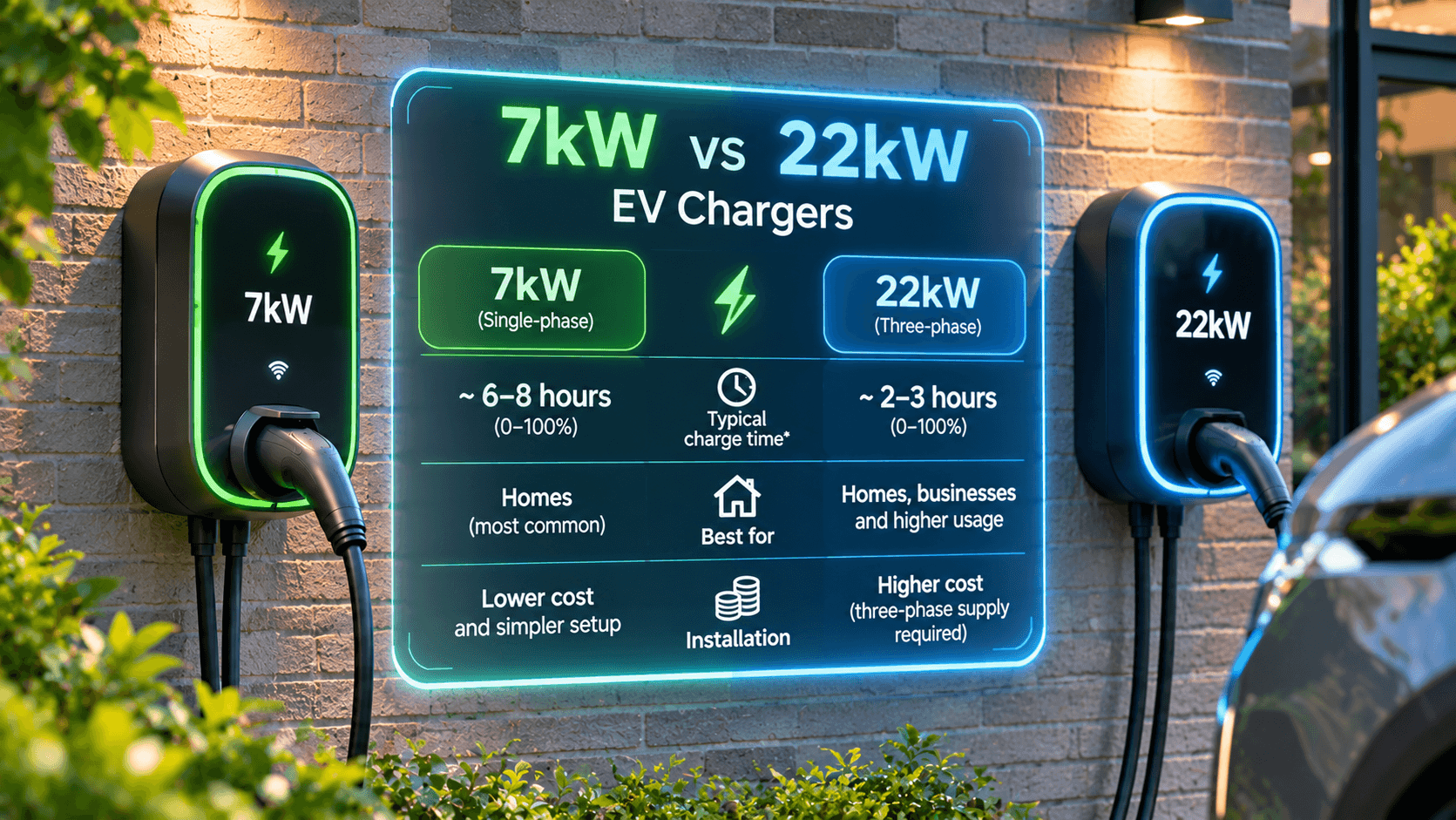
If you're planning a new installation, understanding the differences between 7kW and 22kW EV chargers can also help you choose suitable equipment for your home.
How Long Does It Take to Charge an EV Overnight?
Charging time depends on the vehicle's battery capacity, the amount of energy required and the charging power available.
For example, a 7kW home charger operating for five hours could theoretically deliver approximately 35kWh of electricity.
Allowing for charging losses, the amount stored in the battery would be lower.
A vehicle requiring only a modest daily top-up may comfortably recharge during a five-hour off-peak window.
However, a driver returning home with a nearly empty large battery may need a longer charging session.
Typical Overnight Charging Examples
| Charging Duration | Energy Supplied at 7kW | Approximate Battery Energy at 90% Efficiency |
|---|---|---|
| 3 hours | 21kWh | 18.9kWh |
| 4 hours | 28kWh | 25.2kWh |
| 5 hours | 35kWh | 31.5kWh |
| 6 hours | 42kWh | 37.8kWh |
Illustrative figures assuming a sustained 7kW charging rate. Actual performance varies by vehicle, charger and installation.
For most drivers, the important question is not whether they can fully recharge an empty battery every night.
It is whether the discounted charging window can replace the energy used during their normal daily journeys.
Are EV Electricity Tariffs Worth It for Low-Mileage Drivers?
Not every electric vehicle owner will benefit equally from a specialist tariff.
If you drive relatively few miles each week, your electricity consumption for charging may be modest.
For example, a driver covering 3,000 miles annually at 3.5 miles per kWh, with 90% charging efficiency, would purchase approximately 952kWh of electricity for charging.
At 26p per kWh, that would cost around £248 annually.
At 8p per kWh, the same electricity would cost approximately £76.
The difference is about £171 per year before considering changes to daytime rates, standing charges or other tariff conditions.
For some households, that saving may justify switching.
For others, a standard electricity tariff with lower daytime prices may be more economical.
The decision depends on your overall electricity consumption.
Can Solar Panels Reduce EV Charging Costs Further?
Solar panels can provide another way to reduce the amount of electricity purchased from the grid.
If your home generates surplus solar electricity during the day, a compatible EV charger may be able to direct some of that energy into your vehicle.
This can reduce reliance on imported electricity.
However, solar charging is not automatically free.
There are installation costs to consider, and using electricity to charge your car may mean exporting less energy to the grid and receiving fewer export payments.
Solar generation also varies throughout the year, with shorter winter days generally providing less electricity than summer.
Households that can charge during daylight hours may benefit more directly from surplus solar generation than drivers who are away from home throughout the day.
Our guide to charging an electric car with solar panels explores how solar-compatible chargers work and when solar EV charging makes financial sense.
How to Choose the Best EV Electricity Tariff
The best EV electricity tariff depends on your driving habits, household electricity usage and charging equipment.
Before switching suppliers, consider the following factors.
1. Check the Off-Peak Charging Window
Look at when the discounted electricity period starts and ends.
A longer window may be useful if you regularly need to replenish a substantial amount of battery energy.
2. Compare Daytime Electricity Rates
Calculate how much electricity your household uses outside the discounted charging hours.
A higher daytime rate could offset savings from cheap overnight charging.
3. Check Standing Charges
Standing charges are fixed daily costs that apply regardless of how much electricity you consume.
Include them when comparing annual tariff costs.
4. Confirm Vehicle and Charger Compatibility
Some smart charging tariffs require specific vehicles, chargers or software integrations.
Check compatibility before switching or purchasing equipment.
5. Consider Your Annual Mileage
Higher-mileage drivers generally use more electricity for charging and may have greater opportunities to save through off-peak tariffs.
However, the household's total electricity usage still matters.
6. Check Contract Terms and Exit Fees
Some tariffs are fixed for a specified period, while others have variable prices.
Check whether exit fees apply and whether the supplier can change the discounted charging rate.
7. Compare Your Full Annual Electricity Bill
The most useful comparison includes EV charging, household electricity, standing charges and any additional fees.
Do not assume that the tariff with the lowest advertised night rate is automatically the cheapest.
Frequently Asked Questions
What Is the Cheapest EV Electricity Tariff in the UK?
The cheapest tariff depends on current supplier offers, regional pricing, compatibility and household electricity consumption. Some tariffs advertise overnight rates below 7p per kWh, but the lowest night rate does not necessarily produce the lowest total annual bill.
Can I Charge My Electric Car for Less Than 10p per kWh?
Yes. Several UK EV electricity tariffs offer discounted charging rates below 10p per kWh, subject to eligibility and tariff conditions. Rates can change, so check current supplier quotations.
Is It Cheaper to Charge an Electric Car Overnight?
Usually, if you are on a tariff that offers lower overnight electricity rates. On a single-rate tariff, charging overnight may cost the same as charging during the day.
Can I Get an EV Tariff Without a Home Charger?
Some tariffs may be available without a dedicated home chargepoint, depending on supplier requirements and vehicle compatibility. However, charging through an ordinary household socket is slower, and any regular charging arrangement must be electrically suitable and safe.
Do EV Tariffs Require a Smart Meter?
Many specialist EV tariffs require a working smart meter, particularly those with time-of-use pricing or smart charging features. Requirements vary by supplier.
Does Cheap Overnight Electricity Apply to the Whole House?
On many time-of-use tariffs, the discounted rate applies to all electricity used during the off-peak window. Other products provide discounts specifically for eligible EV charging. Check the tariff terms.
Can I Change EV Electricity Tariffs After Installing a Charger?
Yes, provided you meet the new supplier's eligibility requirements. However, some smart tariffs only support certain chargers or vehicles, so compatibility should be checked before switching.
Are EV Tariffs Better Than Standard Electricity Tariffs?
They can be, particularly for drivers who charge regularly at home during discounted hours. However, households with limited EV charging needs or high daytime electricity consumption may find another tariff more economical.
Make the Most of Cheap Home EV Charging
Choosing the right electricity tariff can significantly reduce the ongoing cost of owning an electric vehicle.
However, the benefits depend on your charging habits, household electricity consumption and the equipment installed at your property.
A suitable home charger can make it easier to schedule charging during cheaper periods and take advantage of smart charging features.
If you're planning to install a home charging point, PickASparky helps you find eligible installers covering your area and compare installation options.