Usage and cost
Tethered vs Untethered EV Chargers: Which Should You Choose?
When choosing a home EV charger, one of the first decisions you'll face is whether to buy a tethered or untethered charging point. A tethered EV charger has a permanently attached charging cable, while an untethered charger has a socket that allows you to connect a separate cable. Both options can
By PickASparky Team
16 min read
When choosing a home EV charger, one of the first decisions you'll face is whether to buy a tethered or untethered charging point.
A tethered EV charger has a permanently attached charging cable, while an untethered charger has a socket that allows you to connect a separate cable.
Both options can provide safe, convenient home charging, and neither is automatically faster or more efficient than the other.
The best choice depends on how you park, how often you charge, whether you share the charger with other vehicles and how important appearance and convenience are to you.
In this guide, we compare tethered and untethered EV chargers, including their advantages, disadvantages, costs and compatibility with electric vehicles in the UK.
What Is a Tethered EV Charger?
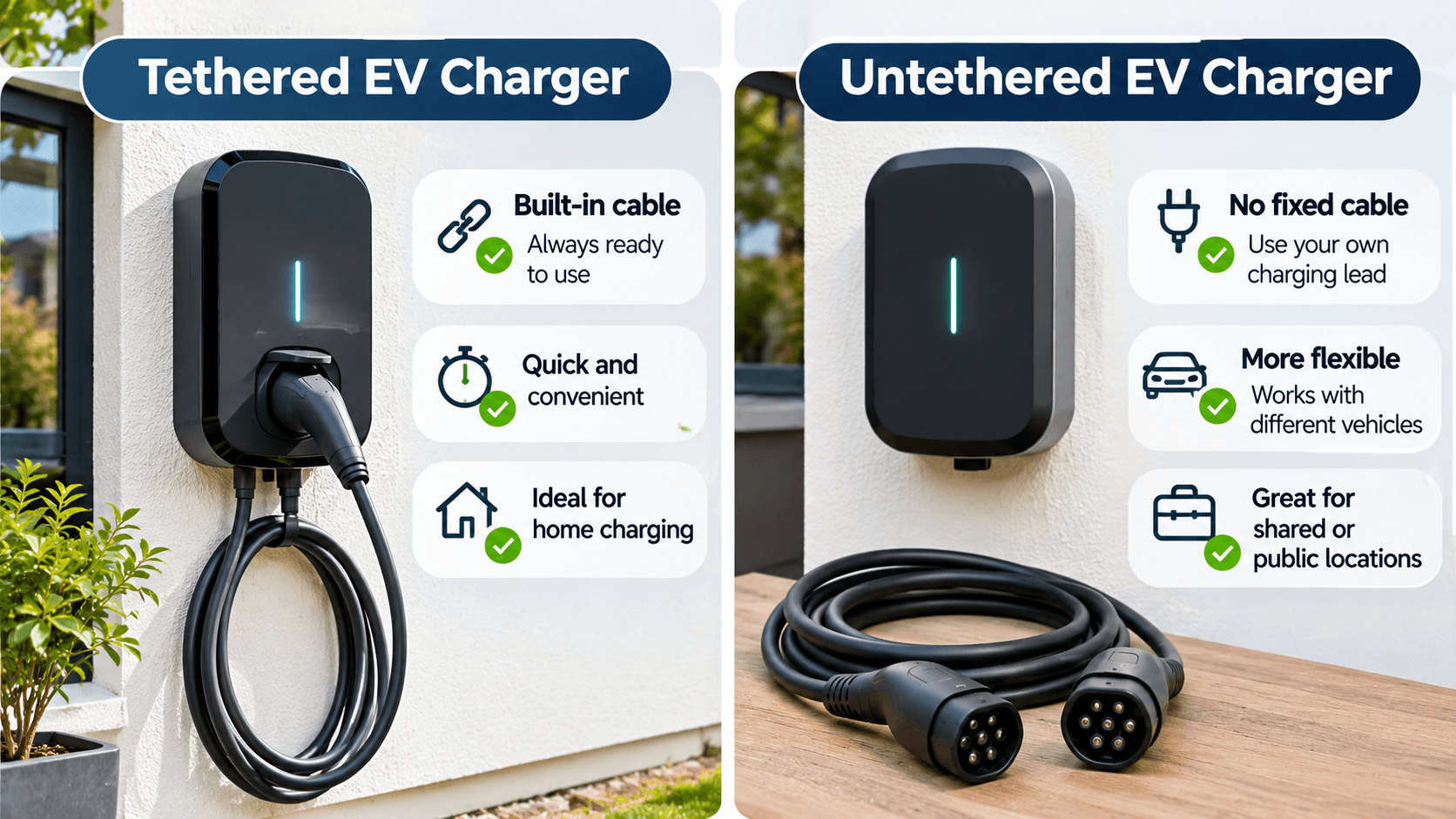
A tethered EV charger is a charging point with a cable permanently attached to the unit.
The cable stays connected to the charger, so you only need to take the connector and plug it into your electric vehicle when you want to charge.
This is similar to using a petrol pump, where the hose is already attached and ready to use.
For many homeowners, the main advantage is convenience.
You don't need to retrieve a separate charging cable from your vehicle, connect it to the charging point and put it away again after charging.
Advantages of Tethered EV Chargers
Convenient everyday charging
A permanently attached cable makes charging quick and straightforward, especially for drivers who plug in their vehicles every evening.
Less handling of charging equipment
Because the cable stays attached, you don't need to repeatedly remove it from your car's boot or another storage location.
Useful in bad weather
When it's raining or cold, having the cable ready to use can make charging more convenient.
Reduced risk of forgetting your cable
You don't need to remember to bring a separate cable home to use your charging point.
Disadvantages of Tethered EV Chargers
More visible cabling
The charging cable remains outside the unit when not in use, which may be less appealing if you prefer a minimalist appearance.
Cable storage is important
The cable needs to be stored neatly using a suitable holder or cable management system to prevent it becoming a trip hazard.
Fixed cable length
If you change vehicles or parking arrangements, the existing cable may not reach the new charging port position.
Potential replacement costs
If the attached cable becomes damaged, replacement may require work by the manufacturer or a suitably competent technician.
What Is an Untethered EV Charger?
An untethered EV charger has a charging socket rather than a permanently attached cable.
To charge your vehicle, you connect a compatible charging cable between the charger and the car.
When charging is complete, you can disconnect the cable and store it separately.
Untethered chargers are sometimes called socketed EV chargers.
They are popular with homeowners who prefer a tidy charging installation or want greater flexibility when choosing charging cables.
Advantages of Untethered EV Chargers
Cleaner appearance
Without a permanently attached cable, the charger can look neater when not in use.
Flexible cable lengths
You can choose a compatible cable length that suits your parking arrangement.
Easier cable replacement
If a detachable cable becomes damaged, it can usually be replaced without changing the entire charging unit.
Flexibility for different vehicles
A socketed charger can offer flexibility when used with different compatible charging cables and vehicles.
Disadvantages of Untethered EV Chargers
More steps when charging
You need to connect and disconnect a separate cable each time you charge.
Cable storage required
The charging cable must be stored somewhere convenient when not in use.
Potential additional equipment cost
Some untethered chargers are sold without a charging cable, meaning you may need to purchase one separately.
Less convenient in poor weather
Handling a separate cable in heavy rain or cold weather can be less convenient than using a tethered charger.
Tethered vs Untethered EV Chargers: Key Differences
Both charger types perform the same basic function: supplying electricity safely to a compatible electric vehicle.
The main differences relate to convenience, appearance and cable management.
| Feature | Tethered EV Charger | Untethered EV Charger |
|---|---|---|
| Charging cable | Permanently attached | Separate detachable cable |
| Everyday convenience | Generally more convenient | Requires connecting a cable |
| Appearance | Cable remains visible | Cleaner appearance when not in use |
| Cable storage | External holder or cable wrap | Separate storage location |
| Cable replacement | May require specialist assistance | Usually easier to replace |
| Cable length flexibility | Limited by attached cable | Choose a compatible cable length |
| Charging speed | Depends on charger and vehicle | Depends on charger and vehicle |
| Suitable for home charging | Yes | Yes |
Neither option is universally better.
The most suitable choice depends on how you use your charging point and the practical layout of your property.
Are Tethered EV Chargers Faster Than Untethered Chargers?
No. A tethered charger is not inherently faster than an untethered charger.
Charging speed depends primarily on the charger's rated power, the vehicle's onboard AC charger and the available electrical supply.
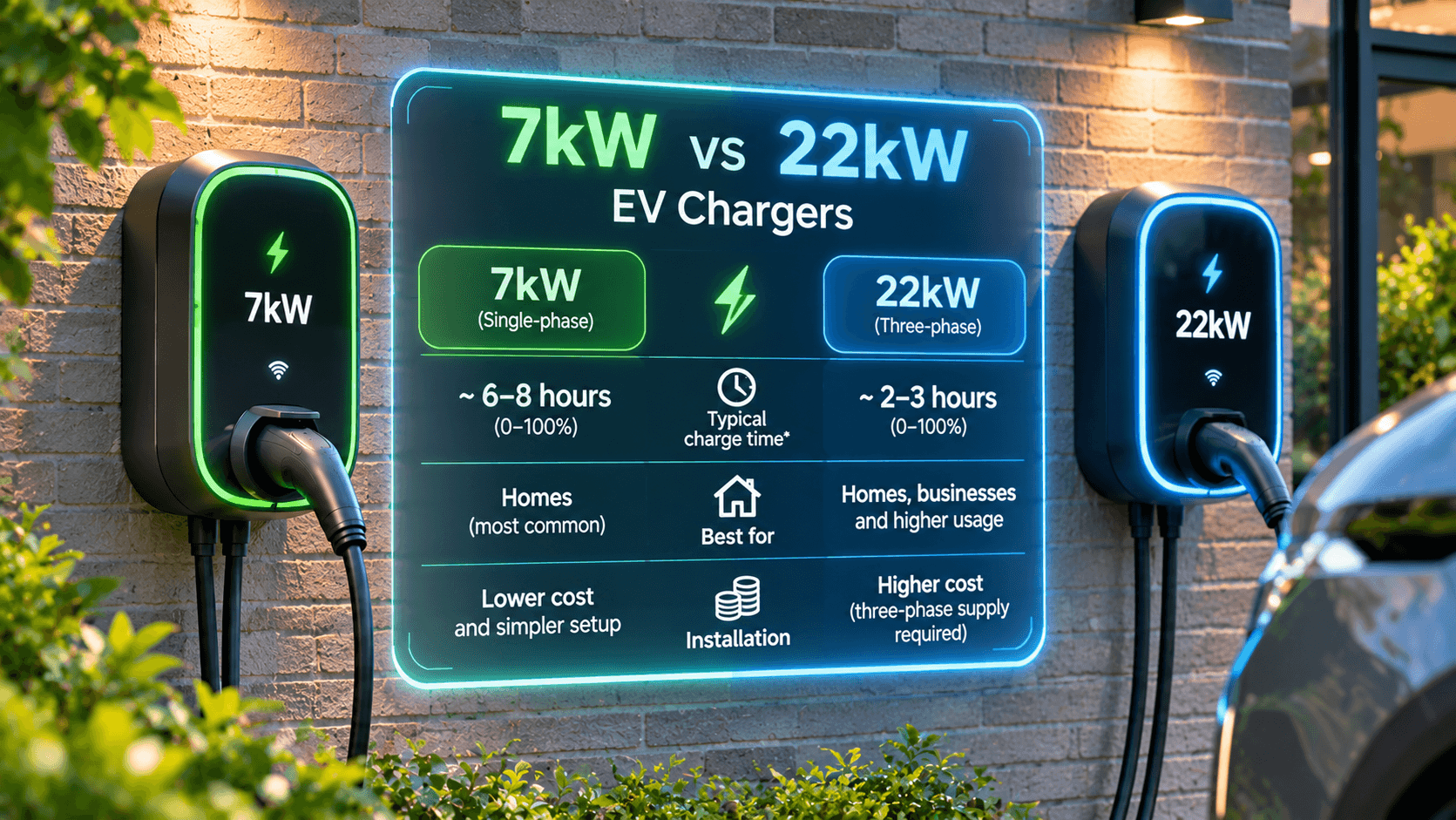
For example, a 7kW tethered charger and a 7kW untethered charger can deliver approximately the same charging power when used with suitable equipment.
Likewise, a 22kW charger requires a suitable three-phase supply and a vehicle capable of accepting the higher AC charging power.
The charging cable must also have an appropriate electrical rating.
An unsuitable or lower-rated cable can limit the charging power available through an untethered charger.
If you're deciding which charging speed your property needs, read our comparison of 7kW vs 22kW EV chargers.
Which Charger Is More Convenient for Everyday Use?
For many households, convenience is the biggest difference between tethered and untethered charging.
Imagine arriving home after work and parking your electric car on the driveway.
With a tethered charger, you simply take the attached connector and plug it into the vehicle.
With an untethered charger, you first retrieve the charging cable, connect it to the charging point and then connect the other end to your vehicle.
The process is reversed when you leave.
Although these extra steps may only take a short time, they can become noticeable when charging regularly.
Tethered Chargers for Daily Charging
A tethered charger may be particularly convenient if:
- You charge your vehicle most evenings.
- You have a dedicated parking space.
- You regularly arrive home late or leave early.
- You prefer not to handle a separate cable.
- Your household uses vehicles with compatible charging connectors.
Untethered Chargers for Occasional Charging
An untethered charger may appeal to drivers who:
- Charge less frequently.
- Prefer a tidy driveway or garage.
- Already own a suitable charging cable.
- Want flexibility when choosing cable lengths.
- Share the charging point with different vehicles.
However, charging frequency is only one consideration. Both types can work equally well for regular home charging.
Are Tethered or Untethered Chargers More Expensive?
The purchase price depends more on the manufacturer, model and features than on whether the charger is tethered or untethered.
Some manufacturers charge more for tethered versions because the cable is included.
Others offer both options at similar prices.
When comparing costs, consider the complete package.
Equipment Costs
A tethered charger normally includes the attached charging cable.
An untethered charger may be sold without a cable, so you should check whether a suitable cable is already available or needs to be purchased.
Charging cables vary in price depending on their length, power rating and construction.
Installation Costs
The electrical installation requirements are generally similar for tethered and untethered chargers with the same rated power.
The installer still needs to assess the electrical supply, cable route, protective equipment and charger location.
As a general UK guide, a straightforward home EV charger installation may cost approximately £800 to £1,200, including the charger and standard installation.
However, the final cost depends on the property and any additional electrical work required.
For a detailed breakdown of equipment prices, electrical upgrades and installation extras, see our guide to EV charger installation costs in the UK.
Which Charger Looks Better on a Driveway?
Appearance is subjective, but untethered chargers generally provide a cleaner look when not in use.
Because the charging cable is removable, only the charging unit remains visible on the wall.
This can be particularly appealing for properties where the charger is installed near the front entrance or in a prominent position.
Tethered chargers have a permanently attached cable, which needs to be stored neatly.
Many modern tethered chargers include cable holders, hooks or integrated cable management features.
A well-designed tethered installation can still look tidy, especially when the charger is positioned carefully.
Does Charger Position Affect Appearance?
Yes.
The charger's location can make a significant difference to how noticeable the installation is.
For example, mounting the charger on a side wall or inside a garage may reduce its visual impact.
However, charger placement must also consider electrical safety, cable length, accessibility and the position of the vehicle's charging port.
The most visually discreet location is not always the most practical or economical installation point.
Are Untethered EV Charging Cables Secure?
Security is another consideration when choosing between tethered and untethered chargers.
A tethered cable remains attached to the charging point, which can reduce the risk of accidentally leaving it elsewhere.
However, an exposed cable can still be vulnerable to damage or theft.
Untethered chargers allow the cable to be removed and stored securely when not in use.
During charging, many vehicles and charging points use locking mechanisms to help secure the connector.
The exact locking behaviour depends on the vehicle, charger and charging session.
Can Someone Steal an Untethered Charging Cable?
Potentially, although many modern charging systems include features designed to reduce this risk.
A compatible vehicle may lock the cable connector while charging.
Some untethered charging points also lock the cable into the socket during an active session.
However, these features vary between models.
If security is a concern, check the charger's specifications and consider storing the cable securely when not in use.
Do Tethered and Untethered Chargers Work With All Electric Cars?
Compatibility depends on the vehicle's charging connector and the equipment being used.
Most modern electric cars sold in the UK use a Type 2 connector for AC charging.
This makes Type 2 home charging equipment a common choice.
However, some older electric vehicles use different connectors.
Type 2 Tethered Chargers
A tethered charger with a Type 2 connector is designed for vehicles with a compatible Type 2 AC charging inlet.
If you later change to a vehicle with a different connector, the attached cable may not be suitable.
Type 2 Untethered Chargers
A socketed Type 2 charger can be used with an appropriate compatible charging cable.
This may offer additional flexibility, particularly where different vehicles require different cable arrangements.
However, compatibility should never be assumed.
Before purchasing a charger or cable, check the vehicle manufacturer's specifications and the charging equipment's supported connections.
What Cable Length Should You Choose?
Charging cable length is an important practical consideration.
The correct length depends on the distance between the charger and the vehicle's charging port.
You should also consider whether the vehicle is normally parked forwards or reversed into the space.
Common home EV charging cable lengths include approximately 5 metres and 7.5 metres, although other lengths are available.
Choosing a Cable for a Tethered Charger
Because the cable is permanently attached, selecting a suitable length before installation is particularly important.
Consider whether the cable will reach the vehicle comfortably without being stretched or creating an obstruction.
If you expect to change vehicles, remember that charging port locations vary between manufacturers and models.
Choosing a Cable for an Untethered Charger
An untethered charger allows you to purchase a separate cable of an appropriate length.
This can provide flexibility if your parking arrangements change.
However, longer cables can be heavier and less convenient to store.
Whichever option you choose, avoid leaving cables across pedestrian routes or areas where they could create a trip hazard.
Which Charger Is Better for a Garage?
Both tethered and untethered chargers can be suitable for garage installations.
The best option depends on the garage layout and how the vehicle is parked.
A tethered charger can be convenient in a garage because the cable can remain neatly stored on a wall-mounted holder.
An untethered charger may be preferable if the garage is used for other purposes and you want to remove the cable when not charging.
What About Detached Garages?
A detached garage may require additional electrical cabling, protection or groundworks.
These installation requirements generally matter more to the overall cost than whether the charger is tethered or untethered.
A qualified installer should assess the available electrical supply and the proposed cable route.
Can Both Charger Types Use Cheap Overnight Electricity?
Yes.
Both tethered and untethered smart chargers can support scheduled charging, provided the equipment has the required features.
Many UK electricity suppliers offer EV tariffs with reduced electricity rates during overnight periods.
For example, you may be able to schedule your charger to operate between midnight and 5am, depending on your tariff.
The cost saving depends on the electricity price and the amount of energy consumed, not whether the cable is permanently attached.
Example: Overnight Charging Costs
Suppose your electric vehicle requires 40kWh of electricity from the grid.
| Electricity Rate | Charging Cost |
|---|---|
| 26p per kWh | £10.40 |
| 15p per kWh | £6.00 |
| 8p per kWh | £3.20 |
Illustrative electricity rates, not current supplier quotations.
Both tethered and untethered chargers could achieve these electricity costs under the same tariff conditions.
For more information about discounted charging periods and supplier options, read our guide to the best EV electricity tariffs in the UK.
Can You Use a Tethered or Untethered Charger With Solar Panels?
Yes. Both types of charger can offer solar-compatible charging features.
The important factor is whether the charger supports the necessary solar integration and power management functionality.
Some smart EV chargers can monitor surplus solar electricity and adjust charging power accordingly.
This allows the vehicle to use some of the electricity generated by the property's solar panels.
However, not every charger includes this capability.
If you are planning to install solar panels or already have them, check compatibility before purchasing a charger.
Our guide to charging an electric car using solar panels explains how solar EV charging works and what equipment may be required.
Tethered vs Untethered: Which Is Better for Your Home?
There is no single correct choice for every household.
A tethered charger is often the most convenient option for drivers who charge regularly and have a dedicated parking space.
An untethered charger may be more suitable for homeowners who prefer a cleaner appearance or want flexibility when selecting charging cables.
Choose a Tethered EV Charger If:
- You charge your electric vehicle frequently.
- You want the quickest and simplest daily charging routine.
- You have a dedicated parking space.
- You prefer not to handle a separate charging cable.
- Your vehicle uses a compatible charging connector.
Choose an Untethered EV Charger If:
- You prefer a tidy appearance when the charger is not in use.
- You want to remove and store the cable separately.
- You may need different cable lengths in the future.
- You share the charging point between different compatible vehicles.
- You already own a suitable charging cable.
For many households, convenience will be the deciding factor.
However, charger reliability, smart features, warranty support and installation suitability are equally important considerations.
Frequently Asked Questions
Is a Tethered EV Charger Better Than an Untethered Charger?
Not necessarily. Tethered chargers are generally more convenient for everyday use, while untethered chargers offer a cleaner appearance and greater cable flexibility. Both can provide reliable home charging.
Are Untethered EV Chargers Slower?
No. Charging speed depends on the charger, vehicle and electrical supply. A correctly rated cable and compatible equipment are required to achieve the available charging power.
Can I Convert an Untethered Charger to a Tethered Charger?
Some manufacturers offer approved cable accessories or different versions of their charging units. However, modifying a charger outside the manufacturer's instructions may affect safety, compliance and warranty coverage. Check with the manufacturer or a qualified installer.
Do Tethered Chargers Come With a Cable?
Yes. A tethered charger includes a permanently attached charging cable. The cable length and connector type depend on the model.
Do Untethered Chargers Include a Charging Cable?
Not always. Some manufacturers sell the charging cable separately, while others offer packages that include one. Check the product specification before purchasing.
Can I Leave an Untethered Cable Connected Permanently?
Some chargers support locking a compatible cable into the socket for extended use, but this depends on the model and manufacturer's instructions. Check whether the charger supports this feature.
Which Charger Is Easier to Maintain?
Both charger types require appropriate care and inspection. Untethered cables can usually be replaced separately, while damaged tethered cables may require manufacturer-approved replacement or professional servicing.
Which Charger Is Best for a Family With Two Electric Cars?
Either option can work. An untethered charger may offer flexibility if the vehicles use different compatible cables, while a tethered charger can be more convenient if both vehicles use the same connector. Charging schedules and electrical capacity should also be considered.
Compare Home EV Charger Installation Quotes
Choosing between a tethered and untethered EV charger is an important part of planning your home charging installation.
The right choice depends on your vehicle, parking arrangements, charging habits and preferred charger features.
A suitably qualified installer can help you assess your property's electrical requirements and choose equipment that meets your needs.
PickASparky helps you find eligible EV charger installers covering your area, allowing you to compare installation options and request quotes.