
Home EV charging made simple
Home EV Charger Installation
Find professional home EV charger installers in your area and compare installation quotes with PickASparky. Whether you have recently purchased an electric vehicle or want to upgrade your existing chargepoint, we help you find the right charging solution for your property, vehicle and budget.
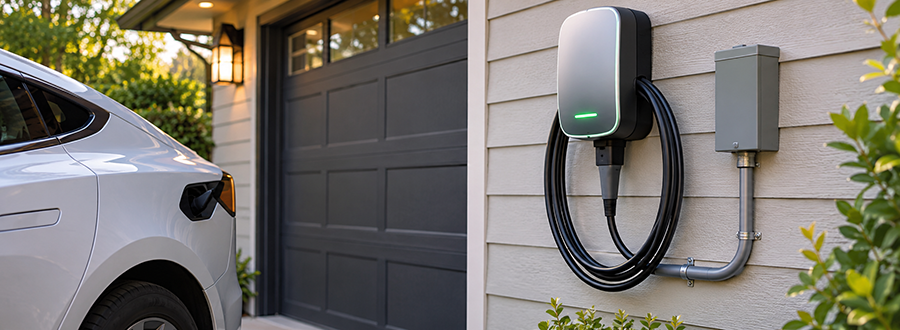
Benefits of Home EV Charging
Installing a dedicated home EV charger allows you to charge your electric vehicle conveniently without relying on public charging stations. With a compatible smart charger and off-peak electricity tariff, you could significantly reduce your everyday charging costs.
- Lower charging costs with off-peak electricity tariffs.
- Convenient overnight charging.
- Faster charging than a standard three-pin socket.
- Dedicated electrical safety features.
- Smart charging and energy monitoring.
- Compatibility with solar panels and battery storage.
How Much Does Home EV Charger Installation Cost?
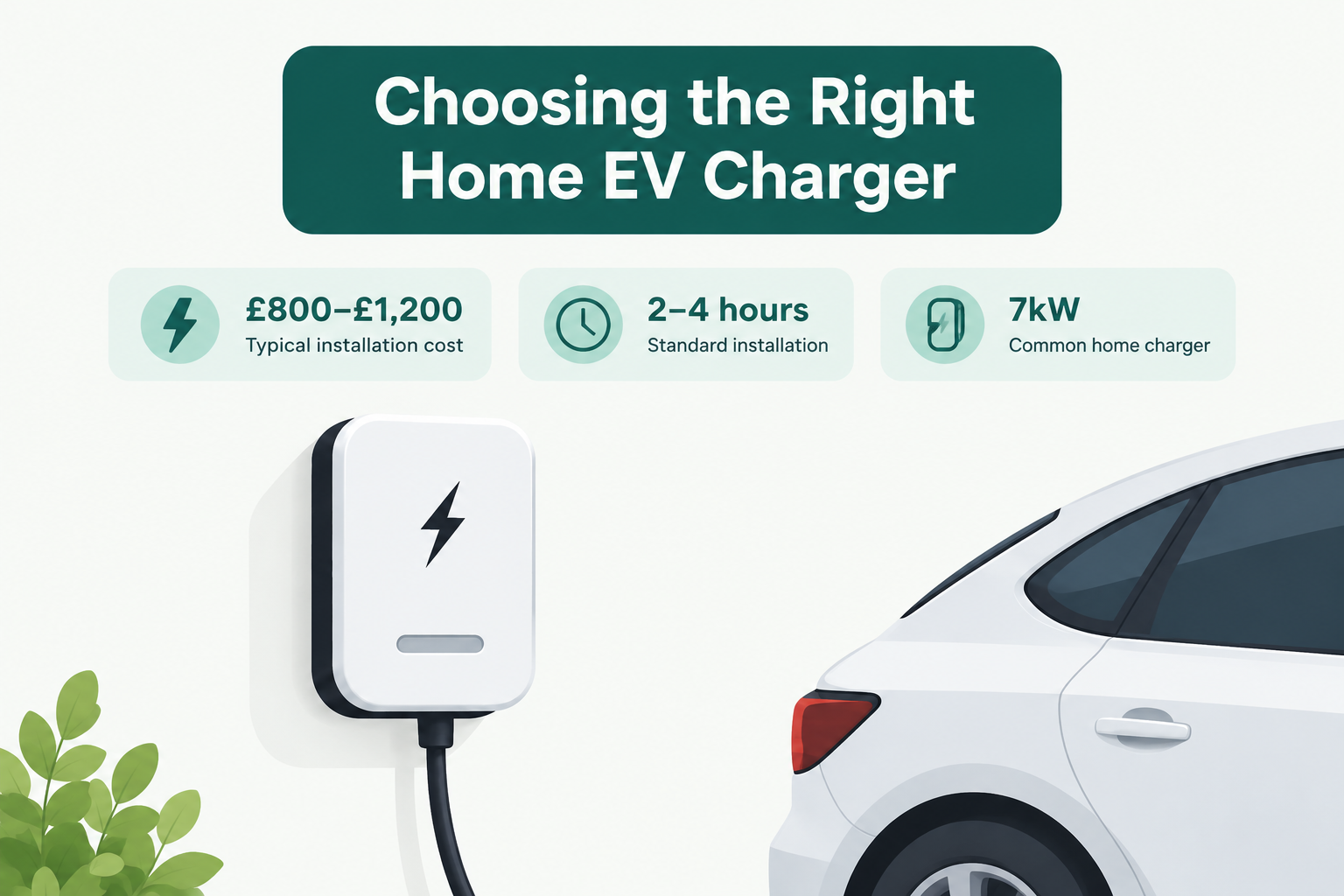
A standard home EV charger installation in the UK may cost approximately £800–£1,200, including the charging unit and installation. The final price depends on the charger model, cable length, electrical supply, consumer unit condition and any additional electrical work required. Eligible households and landlords may also qualify for government chargepoint grants.
Read our guide to EV charger installation costs for a detailed breakdown of potential expenses.
Choosing the Right Home EV Charger
A 7kW smart charger is a popular choice for UK households, providing sufficient power for regular overnight charging. Higher-powered 11kW and 22kW chargers generally require a suitable three-phase electricity supply and a compatible vehicle.
Popular home EV charger brands include Ohme, myenergi, Easee, Hypervolt, Andersen, Tesla, Wallbox, Pod Point and Rolec.
When choosing a charger, consider charging speed, vehicle compatibility, tethered or untethered cable configuration, smart electricity tariffs, solar integration and manufacturer warranties.
Explore our guide to choosing the best home EV charger.
Home EV Charger Installation Requirements
Before installation, your electrician will assess your property's electrical supply, consumer unit, parking arrangements and proposed cable route. Chargers can be installed on driveways, inside garages, underneath carports or on freestanding mounting posts.
Properties without private driveways may benefit from authorised cross-pavement charging solutions. Flats and rented properties may require permission from the landlord, freeholder or property management company.
Find out more about installing an EV charger without a driveway and EV charger planning permission requirements.

The Home EV Charger Installation Process
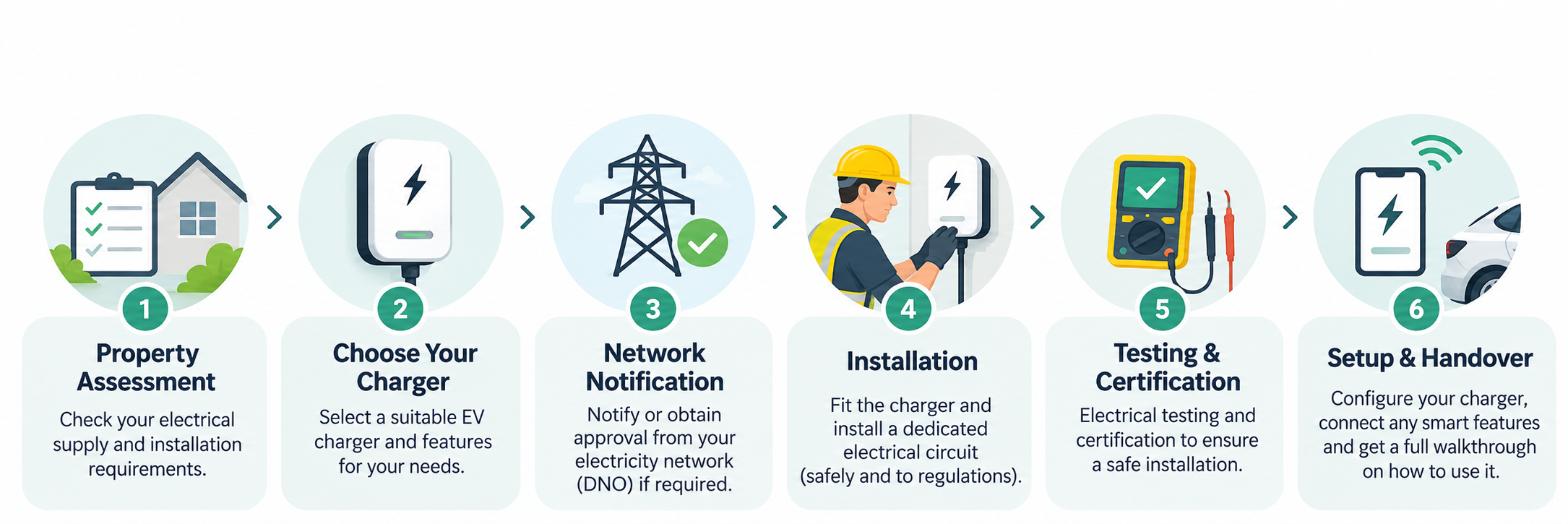
A straightforward installation can often be completed within two to four hours, although more complex electrical work may take longer.
The installation process includes a property and electrical supply assessment, equipment selection, electricity network notification or approval where required, installation of the dedicated electrical circuit, testing, certification and charger configuration.
Always choose a suitably qualified electrician with relevant EV charging experience. Professional registration with organisations such as NICEIC or NAPIT can provide additional reassurance when comparing installers.
Read our step-by-step EV charger installation guide.
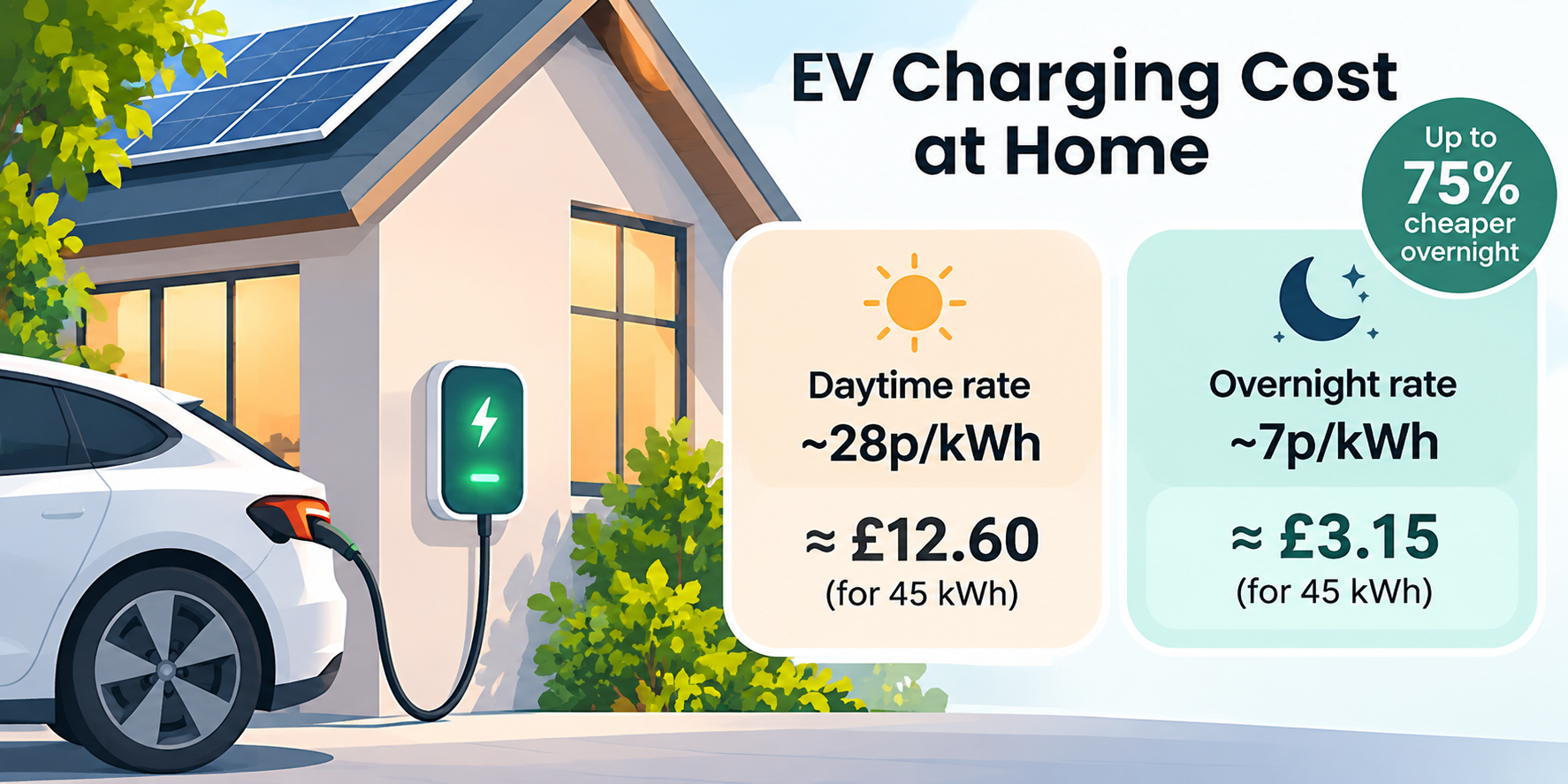
Home Charging Costs and Charging Times
The cost of charging an electric vehicle at home depends on your electricity tariff, battery capacity and charging efficiency. For example, purchasing 60kWh of electricity at an illustrative overnight rate of 8p per kWh would cost £4.80.
A 7kW home charger can recharge a 60kWh battery from 20% to 80% in approximately five hours and 43 minutes, assuming 90% charging efficiency.
Discover more about home EV charging costs, charging times and EV electricity tariffs.
| Battery capacity | 3.6kW charger | 7kW charger | 22kW charger | Cost at 8p/kWh | Cost at 26p/kWh |
|---|---|---|---|---|---|
| 40kWh | 7h 24m | 3h 49m | 1h 13m | £2.13 | £6.93 |
| 50kWh | 9h 16m | 4h 46m | 1h 31m | £2.67 | £8.67 |
| 60kWh | 11h 7m | 5h 43m | 1h 49m | £3.20 | £10.40 |
| 75kWh | 13h 53m | 7h 9m | 2h 16m | £4.00 | £13.00 |
| 90kWh | 16h 40m | 8h 34m | 2h 44m | £4.80 | £15.60 |
| 100kWh | 18h 31m | 9h 31m | 3h 2m | £5.33 | £17.33 |
Estimates are based on charging from 20% to 80% with 90% charging efficiency and illustrative electricity tariffs. Actual charging times and costs may vary depending on vehicle compatibility, available charging power and electricity rates. A 22kW charger generally requires a three-phase electricity supply.
Questions
Frequently asked questions
Do I need planning permission for a home EV charger?
Many standard domestic installations qualify as permitted development in England. However, property restrictions and local planning regulations may require additional permissions.
Do I need a new consumer unit?
Not necessarily. Your installer will assess whether your existing consumer unit can safely accommodate the charging equipment.
Can I charge my electric car using solar panels?
Yes. Compatible EV chargers can use surplus electricity generated by your solar panels, helping reduce your reliance on grid electricity.
Can I install an EV charger at a rented property?
Yes, provided you obtain the necessary permissions and the property meets the electrical installation requirements.
Can I install an EV charger myself?
EV charger installation should be undertaken by a suitably qualified and competent electrical professional to ensure electrical safety and regulatory compliance.
Are home EV chargers suitable for outdoor installation?
Many home EV chargers are specifically designed for outdoor use. Check the manufacturer's environmental protection rating and installation requirements.
Free and no obligation
Compare up to 5 free quotes from local EV charger installers
Enter your postcode and we'll connect you with vetted, local installers.
Get Free QuotesExplore more locations